Last summer Marissa in Austin noticed her water bill jump $40 after a week-long heatwave even though she watered only three times a week. Her front lawn browned at the edges and the tomato plants in the raised beds were wilting by noon. She needed a fix that saved water and gave each zone the right amount—not a one-size-fits-all sprinkler running on a clock.
Match the problem to the right system: small lawn and mixed beds
Problem: A narrow front lawn, a couple of flower beds and a few pots that dry at different rates. The typical homeowner solution—one manual hose timer or a single sprinkler head—either overwaters the lawn to keep the pots alive, or neglects root zones.
Solution: A hybrid, low-cost setup that pairs mobile micro-sprinklers for the lawn with targeted self-watering for containers and a short run of soaker hose for beds. Mobile sprinklers are portable, letting you water turf one side at a time to avoid runoff on slopes. For pots, a slow self-watering spike or a small capillary mat cuts daily hand-watering to once every 4–7 days.
Concrete example and expected savings
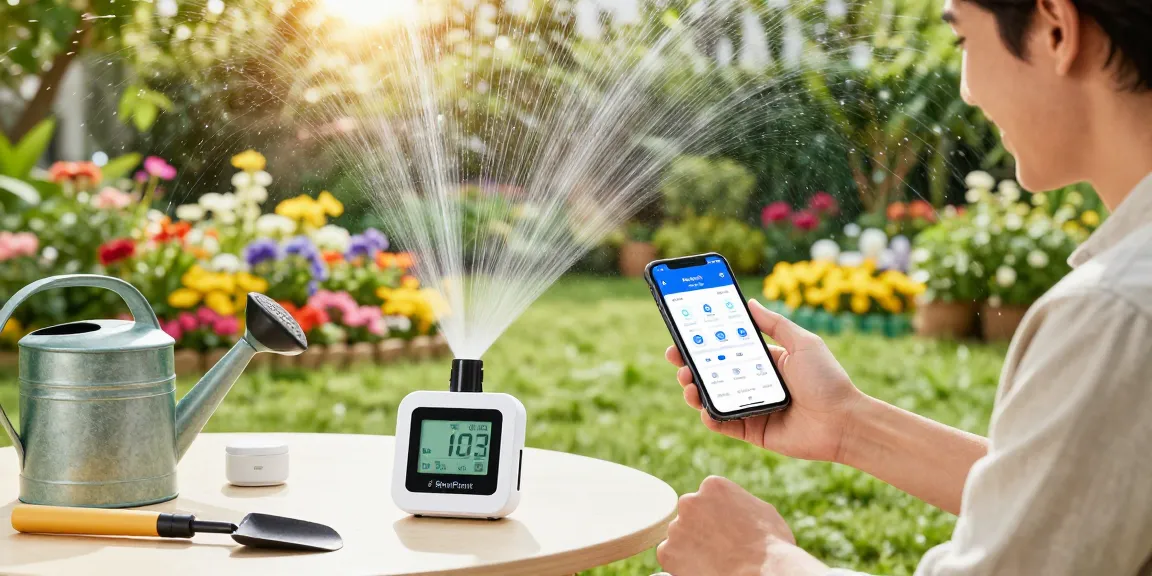
Example: Install a WiFi sprinkler timer for the lawn zone and use a separate drip line or self-watering system for pots. A compact RainPoint WiFi timer can automate lawn cycles while a simple drip emitter kit handles the beds. The EPA WaterSense program estimates smart irrigation controllers can save 8–20% on outdoor water use—on a household that uses 50,000 gallons a year outdoors, that’s 4,000–10,000 gallons saved annually (EPA WaterSense).
Practical tip: Stagger lawn cycles into shorter runs rather than one long run to reduce runoff. If your lawn’s soil is clay, plan two 5–7 minute cycles with a 30–60 minute soak-in interval rather than one 20-minute session.
Large lawns and steep grades: prevent runoff, increase deep soak
Problem: A large yard with hills where long single-run sprinkling causes puddles at the bottom and crusted, dry roots at the top. Water flows downhill before it soaks in, wasting water and leaving higher areas thirsty.
Solution: Break the lawn into multiple zones with a smart in-ground controller and matched rotor heads or multi-stream nozzles. Use cycle-and-soak scheduling—several short cycles per zone spaced out to allow infiltration—and pair that with a moisture sensor that skips cycles after rain.
Concrete example and figures
Example: Replace a legacy mechanical timer with a smart controller that uses local weather data. A smart controller can reduce unnecessary watering during cool spells or after storms. According to university extension publications, switching to matched precipitation-rate nozzles plus cyclic scheduling can cut irrigation water use by 30–50% compared with unmanaged spray systems. In practice, that could drop a typical suburban yard’s outdoor bill by hundreds of dollars annually.
Practical tip: For steep lawns, set rotors to lower precipitation rates (0.25–0.5 inches/hour) and increase run time with more cycles. Install a flow sensor to detect sprinklers hitting pavement and immediately alert you to misaligned heads.
Vegetable gardens and raised beds: precision where it matters
Problem: Your tomatoes, peppers and herbs need consistent root-zone moisture. Overhead sprinklers wet leaves, increasing disease, and waste water evaporating from the soil surface.
Solution: Micro-drip lines with pressure-compensating emitters deliver water directly to the root zone. A purpose-built drip kit sized to your bed is the best match. Drip systems reduce evaporation and runoff while delivering exactly what plants need. RainPoint’s drip kits include barbed fittings and emitters sized for common vegetable layouts, making DIY installation straightforward.
Concrete example and water savings
Example: Convert a 10' × 4' raised bed from manual watering to drip with 1 GPH emitters spaced 12–18 inches apart. Run the system for 30–45 minutes twice a week in early season, adjusting frequency when days get hotter. Studies from extension services show drip irrigation can use up to 50% less water than overhead sprinkling in vegetable systems, with better yields.
Practical tip: Use a simple inline pressure regulator and a filter to prevent emitter clogging. Mark each emitter with a small flag so you can watch wetting uniformity during the first weeks and tweak run times.
Flower beds and foundation plantings: gentle, consistent watering
Problem: Flower beds with mixed species—perennials, annuals, and shrubs—receive the same run time, so shallow-rooted annuals either get flooded or shrubs get underwatered.
Solution: Create sub-zones in the bed using soaker hoses for larger areas and low-flow drip for targeted shrubs. Soaker hose works well where plants are densely spaced and share a similar water need; drip tubing is better for groups of shrubs with deeper roots.
Concrete example and a simple schedule
Example schedule (clay soil, summer): Soaker hose zone: two 20-minute cycles on alternate days. Drip shrub zone: one 45-minute cycle every 3 days. Use a RainPoint WiFi timer to manage these zones independently; the timer can skip runs during rain events when paired with a local weather setting.
ZoneTypical Run TimeFrequency (Summer)Soaker hose (dense annuals)20 min × 2 cyclesEvery other dayDrip (shrubs)45 minEvery 2–3 days
Practical tip: Keep mulch at least 2–3 inches thick to reduce surface evaporation—this can reduce watering frequency by 30% or more.
Potted plants and balconies: slow, steady for less maintenance
Problem: Containers dry out fast in heat, forcing daily hand-watering or stressed plants when you travel.
Solution: Use self-watering systems or low-flow drip micro-emitters attached to a small timered manifold. Self-watering reservoirs or capillary mats paired with a RainPoint mini-timer can give large containers consistent moisture for 3–7 days depending on pot size and exposure.
Concrete example and setup tip
Example: For eight medium pots on a sunny porch, run a 1 GPH emitter to each pot for 30–60 minutes every other day during peak summer; a small 1/2-inch tubing manifold connected to a RainPoint controller is enough. If you expect travel, increase run time slightly for a day or two before leaving and set the timer to water twice during the trip.
Practical tip: Use thicker-walled pots and lighter-colored containers to reduce rapid heating and evaporation. Group pots with similar sun exposure so one timer schedule works for the whole group.
- Use sensors (rain, soil moisture, flow) to eliminate wasted cycles.
- Match emitter flow to soil type—lower GPH for sandy soils, slightly higher for heavy loam.
- Split large zones into smaller ones to fine-tune runtimes and avoid overwatering.
If you want a quick primer on savings and real installation scenarios, this page explains how a coordinated setup can translate to lower bills: RainPoint smart irrigation helps lower water bills.
And for a controller that will handle these schedules, a WiFi timer from RainPoint can automate cycle-and-soak, skip watering on rainy days, and let you tweak zone-by-zone from your phone.
When picking components, prioritize matched precipitation nozzles, pressure regulation, and filtration. Small upfront costs—smart timers, a moisture sensor, and proper emitters—usually pay back within one or two seasons in water savings and less plant loss. For independent verification, the EPA and several university extension programs have water-use figures showing smart controllers and drip systems substantially reduce outdoor water use.